The Architecture of Control
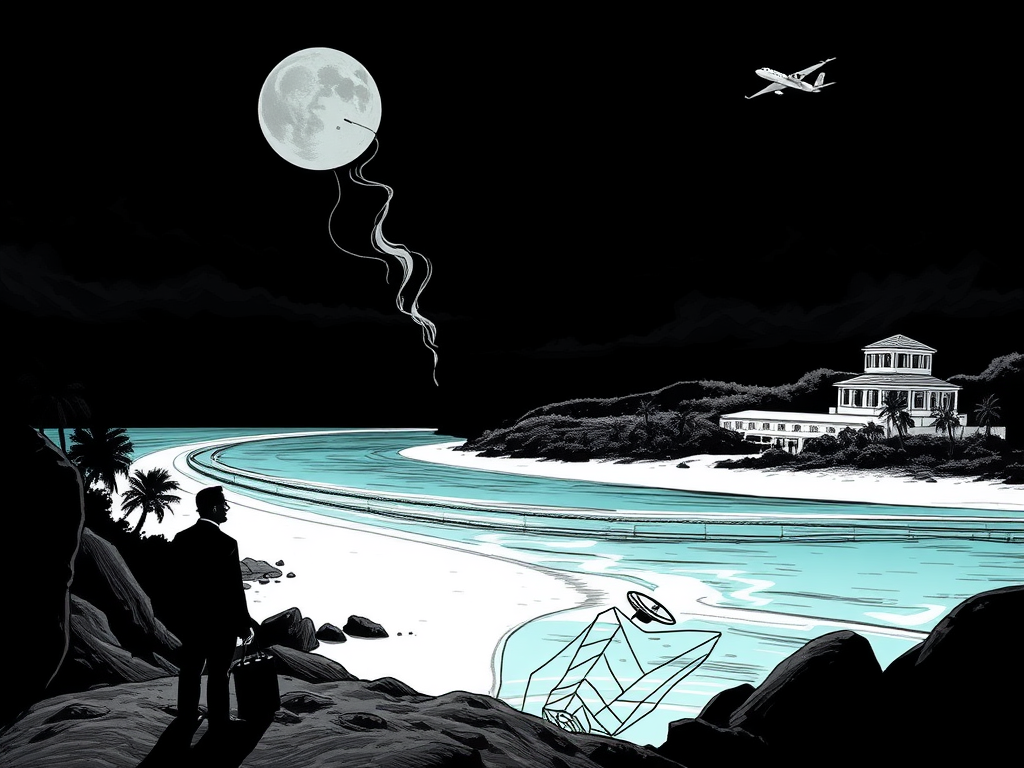
Imagine C. Wright power, would lock on one obscene point in the Caribbean: Little St. James. The island glitters with turquoise water and immaculate beaches. Yet the beauty only sharpens the horror. On this fraudulent paradise, the theory of the “power elite” stops being an abstract sociological insight and becomes a living organism that feeds on the young, the weak, and the powerless.
The Machinery of Power
The public has been encouraged to see the Epstein story as a tale of sexual deviance. This framing is convenient. It allows the public to condemn one man, then return to the fantasy that institutions still protect them. But the truth is far more sinister. Through the lens of Mills, Epstein was not simply a predator. He was a broker. He facilitated a shadow economy that trafficked in influence, immunity, and the corruption of democratic power. The pedophilia was not the aberration. It was the engine. The real product was the soul, stripped of dignity and turned into leverage.
Beyond the Surface
In The Power Elite, Mills described a small circle of economic, political, and military leaders who share education, worldview, and allegiance to their own continuity. Epstein’s network is this thesis made real. He became the hub that connected these sectors into a single structure of impunity.
The Logic of Domination
He first ascended into the economic elite with calculated deception. His wealth was opaque and often inexplicable, which served him well. In elite circles, mystery often functions as proof of power. His Manhattan mansion, his private island, and his plane were not merely symbols of success. They were instruments of recruitment. His extraordinary relationship with Les Wexner, who handed him sweeping legal authority and a seventy-seven million dollar townhome, was not a friendship. It was an alliance that legitimized a man who would otherwise never have crossed the threshold of true wealth.
A Deeper Mechanism
With his performance of financial power complete, Epstein drew in the political elite. The flight logs stand as the defining text of this corruption. Presidents Clinton and Trump, Prince Andrew, cabinet officials, senators, and former heads of state boarded his plane. They were not passengers. They were participants in a system that offered moral freedom in exchange for future obedience. Their presence gave Epstein a second shield. His crimes were folded into the larger interest of protecting the reputations of the powerful.
The Instruments of Authority
The third pillar extends Mills’ military category into the modern national security and intelligence sphere. Here the story darkens. Ghislaine Maxwell was the daughter of Robert Maxwell, a man long associated with intelligence services. Epstein’s meetings with Ehud Barak and Barak’s aide Yoni Koren, an intelligence veteran, reveal a network that reached beyond private vice and into geopolitical strategy. At this level, the scandal becomes not just criminal but structural. It touches the machinery that decides what a nation sees, what it ignores, and what it protects.
The Calculus of Power
The pedophilia was the operational core. The young girls were treated as raw material. The island and the jet were the supply chain. The pleasure was the bait. The true profit came from the residue of the crime: kompromat. A powerful man caught on camera with a minor becomes a tool that can be used again and again. A senator can be pushed. A policy can be tilted. A secret can be extracted. The value lies not in the moment of abuse. It lies in the power to shape public life through private shame. At scale, this becomes nothing less than a covert attack on democratic governance.
The Theater of the State
The most damning evidence that this was a systemic structure is Epstein’s extraordinary protection. His 2008 plea deal, arranged by U.S. Attorney Alexander Acosta, was not a miscarriage of justice. It was the justice system revealing whom it truly serves. An array of elite lawyers intervened. Media coverage softened. Institutions bent. Epstein did not escape the system. He was sheltered by it. His eventual death in federal custody, declared a suicide, completed the pattern. Whether born of incompetence or design, it achieved the same goal. The last man who could have traced the entire map of corruption was silenced.
The Anatomy of Submission
Some argue this was the work of individuals rather than a coordinated elite. This is a comforting lie. Individuals do not receive synchronized protection from multiple arms of government, media, and finance. Systems do. Epstein’s saga is not the exposure of a lone predator. It is the unveiling of an economy that operates alongside the official one. It has its own currency in secrets and favors, its own logistical infrastructure in private jets and island properties, and its own legal arm in the form of quiet immunity deals.
The Grammar of Control
What remains is a brutal ledger. On one side stand the cold terms of the powerful: influence, access, leverage. On the other side are the victims whose bodies and futures were consumed to fuel this order. Virginia Giuffre captured this truth with devastating clarity. She said she felt like a shell in a cage. The metaphor is exact. She was reduced to an object that could be traded within an economy that pretends it does not exist.
The Shape of the Cage
The horror is not hidden. It is not a ghost haunting the machine. It is the machine itself. A system that converts the pleasure of the powerful into the suffering of the powerless, and then calls the transaction inevitable. The Epstein affair is not a maze that confuses us. It is a marketplace that prices everything and everyone. In this market, democracy is simply another commodity, and the citizens who believe otherwise are its most naive customers.