The Architecture of Control
The age of the spectacular corporate layoff is quietly slipping away. For decades, the standard script involved a single convulsive announcement. A solemn CEO appeared on television, thousands of employees were ushered out in a single afternoon, and the business pages erupted with headlines that framed the moment as a reckoning. It was brutal, but it had a beginning and an end. The storm came, the storm passed, and the long work of rebuilding began.
The Machinery of Power
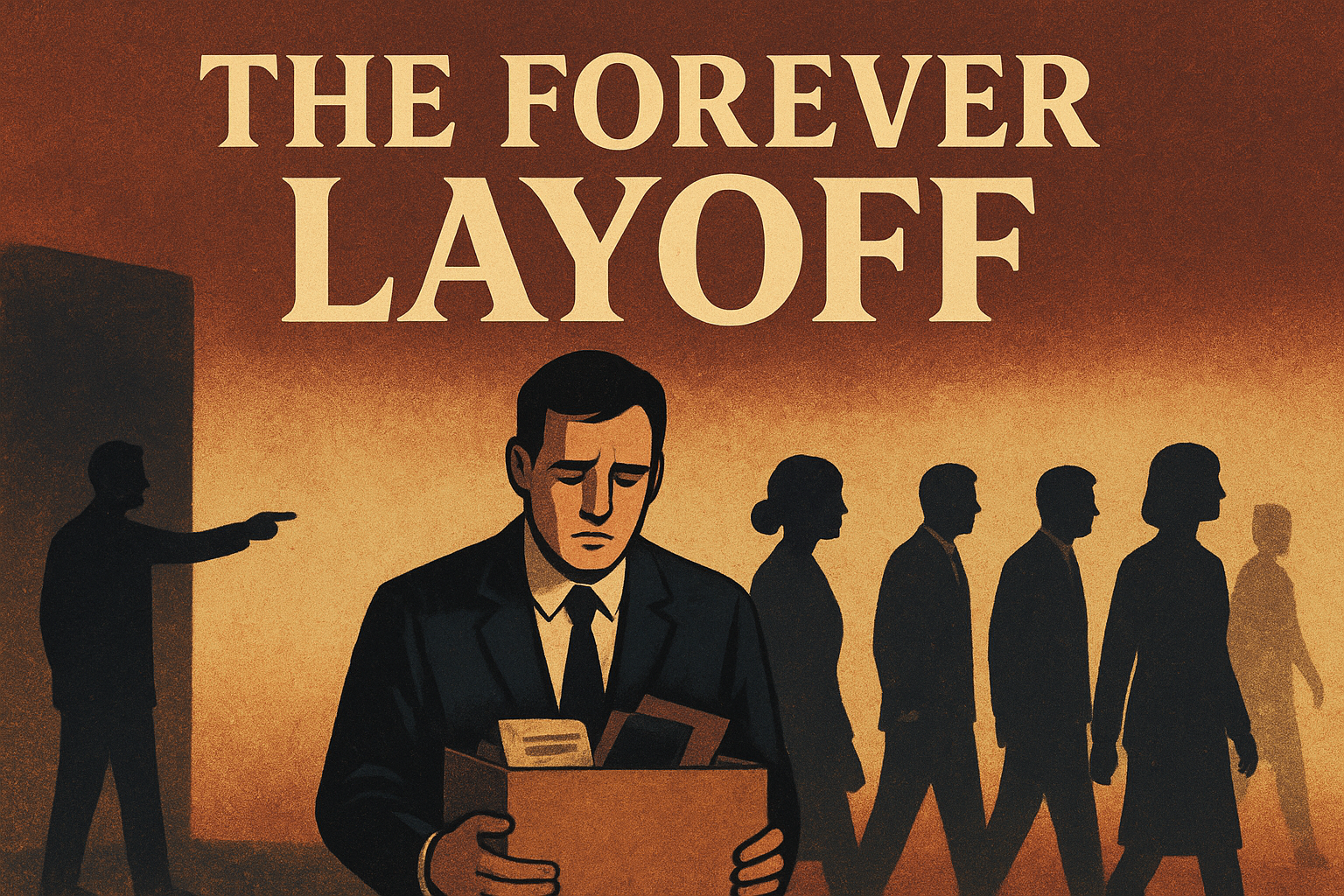
A new strategy is now taking hold, and it speaks in a softer register while carrying a far sharper blade. It is known as the rolling layoff. Workers have another name for it: the forever layoff.
Beyond the Surface
The method is disarmingly simple. Instead of one sweeping reduction, a company opts for a series of small, steady cuts. A few dozen this month, a few dozen the next, a discreet procession of departures that never quite rises to the level of public scandal or legal consequence. Executives can describe the practice as careful, precise management. The truth is far more unsettling. The forever layoff is an ongoing purge that hollows companies from within and erodes the bond that once linked employers with the people who built their success.
The Logic of Domination
The logic behind the practice is cold and efficient. Corporate motivations fall into two familiar categories, both anchored in a philosophy that prizes short-term stability over long-term health.
A Deeper Mechanism
The first is the quiet art of avoiding bad press. A single layoff of five thousand people becomes a story that reshapes markets. It can shake investor confidence and deliver lasting reputational damage. Yet fifty tiny layoffs of a hundred workers each are barely noticed. They dissolve into the fog of quarterly filings. They are treated not as an emergency but as administrative housekeeping. This slow drip of cuts allows executives to preserve the illusion of managerial calm, as if the company is gently tuning itself rather than struggling to stay afloat.
The Instruments of Authority
The second motive is legal evasion. The Worker Adjustment and Retraining Notification Act requires sixty days of notice for any layoff of fifty or more employees at one site. Companies have learned to choreograph their reductions so each round remains just below that threshold. On paper, this saves millions. In practice, it often creates the conditions for constructive dismissal, where fear and attrition achieve what severance packages once did. The strategy is designed to trigger a quiet exodus. Anxiety becomes the mechanism of workforce reduction.
The Calculus of Power
Yet the legal ground beneath this approach is thinner than corporate attorneys might prefer. The WARN Act contains aggregation rules that allow regulators to treat multiple small layoffs within thirty days as a single event. Several states have enacted mini-WARN laws with even stricter requirements, lower thresholds, and longer notice periods. A company that attempts a nationwide rolling layoff could find itself wrapped in legal complications that cost far more than any severance package.
The Theater of the State
The architects of the forever layoff are attempting to impose a factory-era logic on the knowledge economy. They treat employees as interchangeable units in a system powered by fear rather than trust. They overlook the cost paid in morale, loyalty, and shared intelligence. A single layoff is a tragedy. Yet it allows for mourning, regrouping, and renewal. A rolling layoff functions like a slow, unbroken drizzle that sinks into the foundation. It rots the structure from beneath.
The Anatomy of Submission
What remains is a workforce gripped by continuous dread. When the next cut may arrive at any hour, trust evaporates. Workers hesitate to invest in ambitious projects. They protect themselves by avoiding risk. They retreat into a theater of productivity where appearance becomes more important than substance. Innovation withers, replaced by a culture of survival.
The Grammar of Control
Managers fare no better. Many are kept deliberately uninformed, then forced to deliver cuts they cannot explain, decisions they do not support, and justifications they do not believe. Their credibility fractures. Their teams scatter. The company saves money in severance but loses far more in knowledge, cohesion, and the quiet intuition that comes from people who have worked together long enough to understand one another.
The Shape of the Cage
It would be easy to cast executives as pure villains, yet that would be a distortion. Supporters of incremental cuts argue that small reductions are safer in an era of global volatility. A single, sweeping layoff risks cutting too deeply. A rolling approach allows for midcourse corrections. It allows leaders to remove underperformers while preserving essential talent.
The Geography of Influence
There is a measure of truth in that. But it confuses responsible pruning with the strategy of permanent instability. A thoughtful, targeted evaluation of performance is the work of a healthy organization. The forever layoff is something else entirely. It relies on secrecy. It depends on uncertainty. It assumes that fear is an acceptable cost of doing business.
The Circulation of Authority
The rise of the forever layoff signals a shift more profound than any quarterly report can reveal. It reflects a worldview in which labor is seen only as an expense and never as an investment. It marks the end of the postwar ideal of mutual commitment, replaced by a culture that treats insecurity as a permanent operating condition.
The Instruments of Consent
Companies that embrace this model may congratulate themselves on their leaner balance sheets. They may claim victory when their stock price rises by a few dollars. Yet they are constructing hollow enterprises. They retain the outward shape of an organization, but their interiors become thin and brittle. Creativity declines. Purpose dissipates. Trust disappears. The future becomes a landscape of sand.
The Architecture of Acquiescence
A single storm can be endured. A permanent climate of anxiety cannot. If the forever layoff becomes the default setting of corporate America, the most successful companies of the next decade may look sturdy from a distance but turn out to be shells, emptied slowly by their own hand.