The Architecture of Control
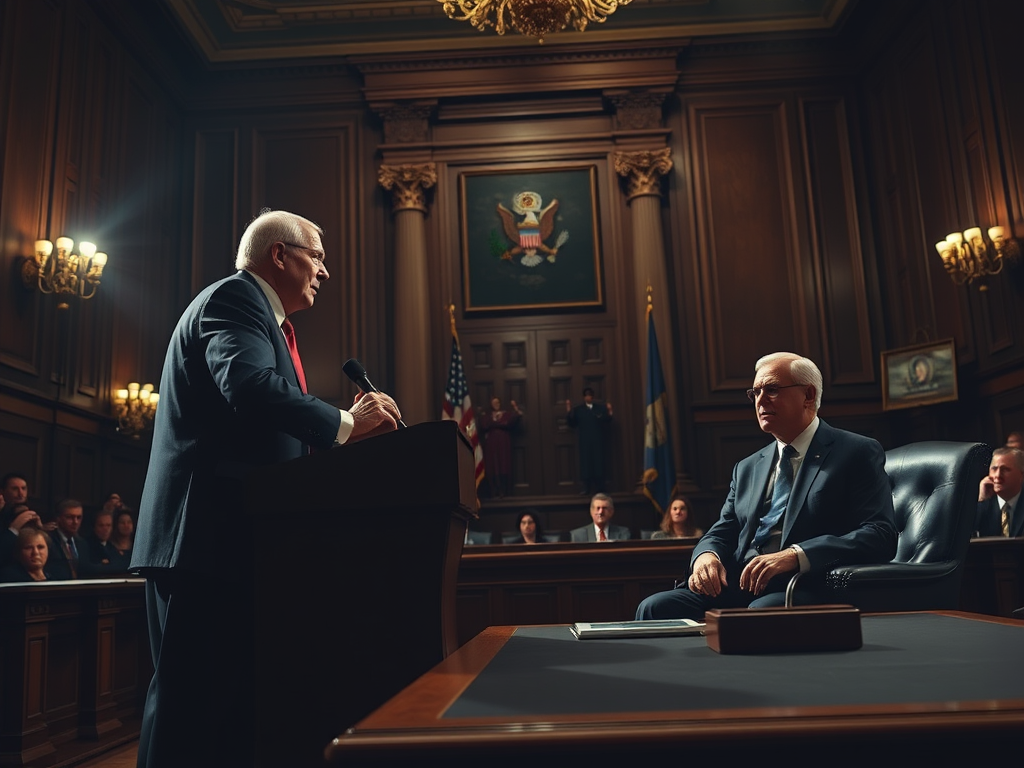
The theater is always the same. The high ceiling, the dark wood, the flags standing sentinel behind men who perform outrage for the cameras. The script, however, wears thin, its pages brittle with overuse. We watch another hearing, another clash of titans, another eruption of sound and fury. We are told it signifies something, this spectacle of a senator accusing an FBI Director of “generational destruction” while the director, Kash Patel, dismisses the charges as baseless political theater. We are meant to believe this is accountability in action, the rough and tumble of democracy, a system correcting itself through passionate debate. This is a lie. The hearing is not a corrective. It is a ritual of power, a meticulously staged diversion where the performance of conflict serves to obscure the true, silent operation of control. The confrontation between Booker and Patel over the Epstein files and the soul of the FBI is not about transparency versus obfuscation. It is a demonstration of how power, when threatened, manufactures spectacle to protect its most vital asset: its invisibility.
The Machinery of Power
Consider the raw materials of this spectacle. At its center lies the fetish object of our era: the “file.” In this case, the files pertaining to Jeffrey Epstein, a man whose life and death constitute a perfect hieroglyph of elite impunity. The file is the secular relic, promised and withheld, a symbol of ultimate truth just beyond reach. Senator Booker’s anger, visceral and real, is channeled into a demand for this file. Director Patel’s defiance, cool and procedural, is a shield against its release. We are thus invited to invest our hope and our outrage in this binary: the righteous seeker of light versus the obstructive guardian of shadows. This framing is a profound manipulation. It reduces a vast architecture of protection to a personal bureaucratic squabble. The true function of the hearing is to legitimize the very delay it purports to decry, by making that delay the subject of public, partisan debate. The file remains closed, but the system can point to the passionate debate about the file as evidence of its own vitality. The energy of public desire for accountability is siphoned off into the endless feedback loop of performative investigation.
Beyond the Surface
This is the essence of what sociologists term symbolic violence. The violence is not in the shouting, but in the way the shouting defines the boundaries of acceptable inquiry. By focusing the nation’s gaze on the *whether* and *when* of a single file’s release, the hearing successfully deflects from the more terrifying *why*. Why does a network, illuminated by the ghastly light of Epstein’s island, retain such durable resistance to scrutiny? The answer lies not in one agency’s failings, but in the interlocking sovereignty of elite networks that transcend nominal partisan affiliation. These networks operate in the interstitial spaces between finance, politics, media, and the law. They are the ultimate bipartisan project. The theatrical partisan conflict between a Democratic senator and a Trump appointed FBI director is the perfect smokescreen for this bipartisan reality. It allows each side to accuse the other of corruption, while the underlying circuitry of mutual protection remains undisturbed, wired into the very infrastructure of the state.
The Logic of Domination
Kash Patel’s presence in the director’s chair is itself a testament to a completed project of institutional capture, a shift from professional neutrality to political loyalty as the paramount qualification for stewardship. This is not an accident, but a strategy. When the institutions designed to investigate power are led by those appointed for their allegiance to a specific faction of power, the result is not malfunction, but precise function. The “generational destruction” Booker warns of is real, but it is not destruction of the FBI’s capacity to act. It is the destruction of its capacity to act *against certain interests*. The firing of senior officials, the delays in sensitive cases, the politicized probes these are not signs of an agency in chaos. They are the signs of an agency being recalibrated, its levers and switches marked with new labels designating who is a target and who is a client. The spectacle of the hearing makes this recalibration a matter of political opinion, of “how you see it.” In doing so, it neutralizes the objective, terrifying truth: the law is being systematically separated from the concept of universal application.
A Deeper Mechanism
Let us be clear about the power dynamic being enacted. On one side, a senator, armed with the power of speech and the threat of more hearings. On the other, a director, armed with the power of the file, the classification stamp, the institutional inertia of a vast security apparatus. This is not a fair fight. It is a managed tension. The hearing grants the senator his catharsis, his clip for the fundraising reel. It grants the director his aura of besieged strength, his standing as a warrior against “baseless” attacks. Both gain political capital from the performance. Who loses? The public, and the very idea of justice. Our attention is monopolized by the drama, while the structural truth ossifies: the system is not refusing to give us answers because it is broken. It is refusing to give us answers because it is working, with brutal efficiency, for its intended beneficiaries. The Epstein files are delayed not due to incompetence, but because their release would expose the social logic of the entire arrangement, revealing the threads that connect playgrounds of the ultra wealthy to the halls of Congress to the chambers of the judiciary. To expose those threads is to invite a reckoning the architecture is designed to prevent.
The Instruments of Authority
Thus, the hearing is a masterclass in hegemony. It takes a legitimate, seething public fury over visible, grotesque injustice and channels it into a pre approved, politically circumscribed ritual that ultimately reinforces the status quo. The people watch, feel a momentary thrill of vindication or anger, and the next day the machinery grinds on. The files remain in the vault. The networks remain intact. The polarization deepens, as each side retreats to its corner, convinced of the other’s villainy, blind to their shared role in a larger theater of power. This affective polarization is not a byproduct of the spectacle, it is its fuel and its objective. A divided public, arguing over which political team is more corrupt, is a public incapable of uniting to question the corruption of the class that both teams ultimately serve.
The Calculus of Power
We are left then, not with a resolution, but with a chilling realization. The most significant battles for power in our time are no longer fought in shadows. They are broadcast in high definition. The clash, the accusation, the defiant testimony these are not leaks in the system. They are the system. They are how modern power confesses, not its crimes, but its immunity. It stages its own interrogations, controls the transcripts of its own depositions, and turns our demand for justice into a seasonal drama, renewed with each election cycle. The Epstein files will come out, perhaps, in some redacted, anodyne form, when their symbolic utility has been exhausted and their dangerous truths safely neutered by time. And when they do, the same actors will be on a new stage, performing a new conflict over a new file, teaching us once again to mistake the spectacle of power for a challenge to it. The real generational destruction is not to an agency, but to a idea: that the powerful can ever be truly held accountable by a process they themselves stage, direct, and star in. The hearing is not an investigation. It is an announcement. It is power, looking us in the eye and daring us to believe we are watching anything other than its latest, most elegant, performance.