The Architecture of Control
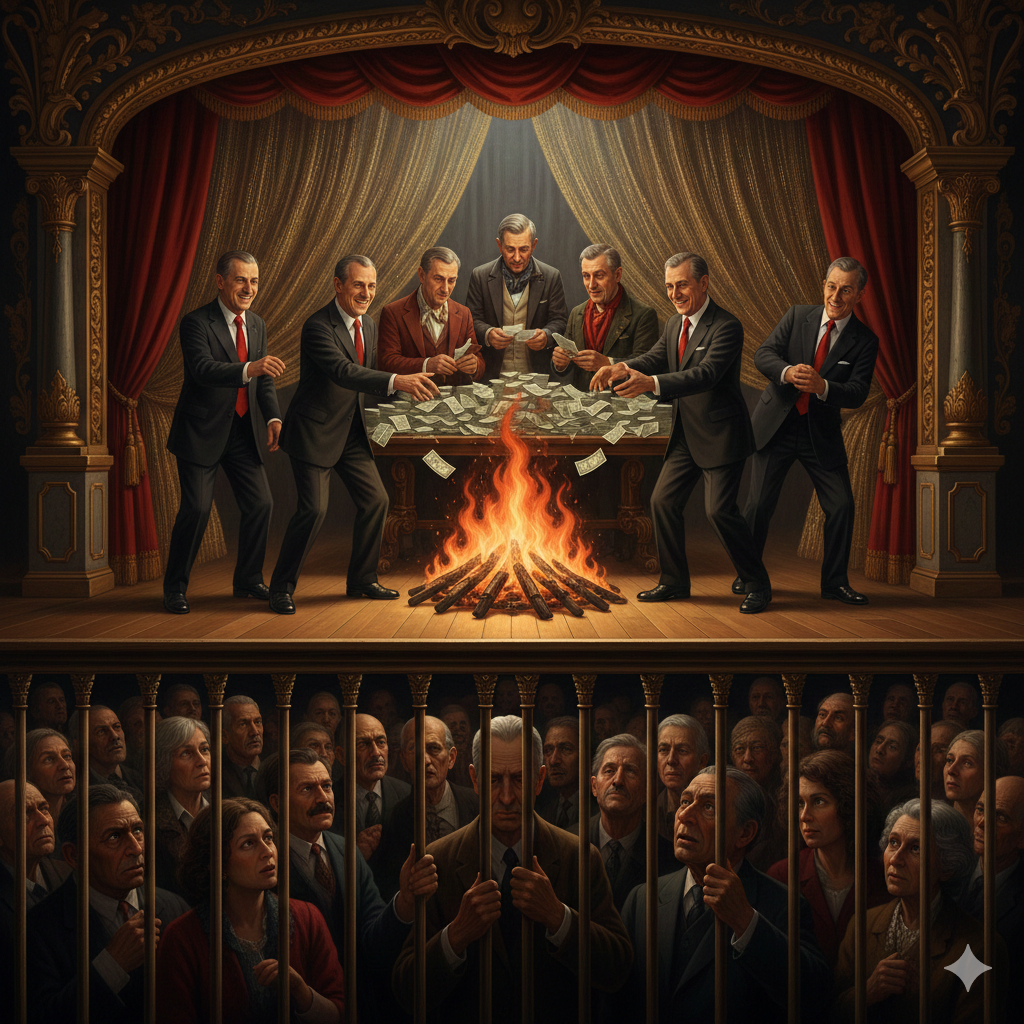
The transaction is always the same, only the currency changes. We are asked to trade our outrage for their theater, our hope for their procedural minutiae, our demand for a different world for their promise of a slightly less brazen version of this one. The current offering on this grim exchange floor is the bipartisan spectacle of a proposed ban on congressional stock trading. Hailed as a watershed, a rare moment of concord in a polarized age, a triumph of ethics over avarice, the legislation is presented as a corrective. But to see it as such is to misunderstand the fundamental grammar of hegemonic control, the process by which dominant groups secure consent by defining the very terms of the debate, by setting the boundaries of the possible. The debate becomes about which stocks, what disclosure windows, which family members are included. It is a labyrinth of technicalities constructed within a cage whose walls we no longer see. The cage is the absolute consensus that a member of Congress should be a person of substantial wealth, that their worldview is and should be shaped by the fortunes of capital. The proposed ban accepts this foundational premise as natural law. It says, in effect, “You may not traffic in the individual pieces, but you may remain, unquestionably, a loyal citizen of the kingdom.” It addresses the crudest conflict of interest the direct, quid-pro-quo trade while sanctifying the systemic one, the total alignment of class interest. A legislator who derives their security, status, and social world from the appreciation of capital assets is a legislator whose fundamental orientation is toward the management and preservation of capital. Whether they day-trade or not is a triviality. Their soul is already spoken for.
The Logic of Domination
Furthermore, the very bipartisanship hailed as its virtue reveals its true function as a safety valve. When rivals unite, it is not for the common good, but for the common defense of the arena in which they compete. The Democratic and Republican parties are competing franchises within the same corporate conglomerate. Their conflict is real, often vicious, but it operates within strict parameters that never threaten the underlying asset base of the ruling class. The spectacle of polarization over culture wars, over procedural squabbles, is the glittering distraction. On matters that truly touch the nexus of political power and wealth, consensus emerges with startling efficiency. This ban is one such matter. It is a collaborative project in damage control, a mutual agreement to sacrifice a small, increasingly untenable privilege in order to protect the vast, invisible edifice of property and power. It is the political equivalent of a controlled burn, a deliberate sacrifice of underbrush to prevent a wildfire that could consume the whole forest.
A Deeper Mechanism
What, then, is the structural imbalance being manipulated here? It is the imbalance between the citizen, whose influence is limited to the intermittent, atomized act of voting, and the legislator, who is embedded daily in a dense web of financial and social relations that constitute the elite continuum. The citizen asks for representation, for a voice. The legislator, regardless of party, swims in the waters of equity markets, donor networks, elite clubs, and boardroom futures. The ban on trading is a pacifier offered to the citizen, a token that says, “See, we have severed the most vulgar link.” But it leaves the legislator drowning in, and composed of, the same material. The power move is to redefine corruption from a systemic condition to a personal ethical failure. It individualizes a collective crime. It takes a Congress that functions, in aggregate, as a steering committee for capital, and suggests that the problem is a few bad apples making phone calls from the floor. This is the ultimate manipulation, to shrink the scope of critique so dramatically that reform becomes its own form of reinforcement.
The Instruments of Authority
The legislation, should it pass, will be hailed as a victory for transparency. But we must ask, transparency for what? To see the gears turn more clearly within a machine we did not build and cannot control? The energy of popular anger, the demand for a government that serves people rather than portfolios, is being skillfully channeled into this narrow, technical fix. It is a masterpiece of political jiu jitsu, using the momentum of public outrage to achieve a minor adjustment that strengthens the system’s defensive posture. The message is clear, you may no longer smell the smoke from the kitchen, so you will assume the house is no longer on fire. The deeper, more profound demands, for a Congress that looks like the people, that lives like the people, whose interests are severed from the speculative fortunes of the few, are rendered unthinkable, radical, beyond the pale.
The Calculus of Power
In the end, this episode is a case study in the sociology of elites, a lesson in how power preserves itself not merely through defiance, but through adept, strategic concession. It gives up the pawn to protect the king. It understands that legitimacy is its most precious resource, and that legitimacy must occasionally be replenished with rituals of atonement. The stock trading ban is such a ritual. It allows the political class to don the hair shirt of rectitude, to perform a public cleansing, all while the engines of inequality hum undisturbed in the basement. They will trade their stocks, and in return, we are asked to trade our suspicion for a renewed, if cautious, faith. The transaction is always the same. The question is whether we will finally refuse to pay. For the true scandal was never that they were trading stocks, but that we ever believed they were trading on our behalf.