The Architecture of Control
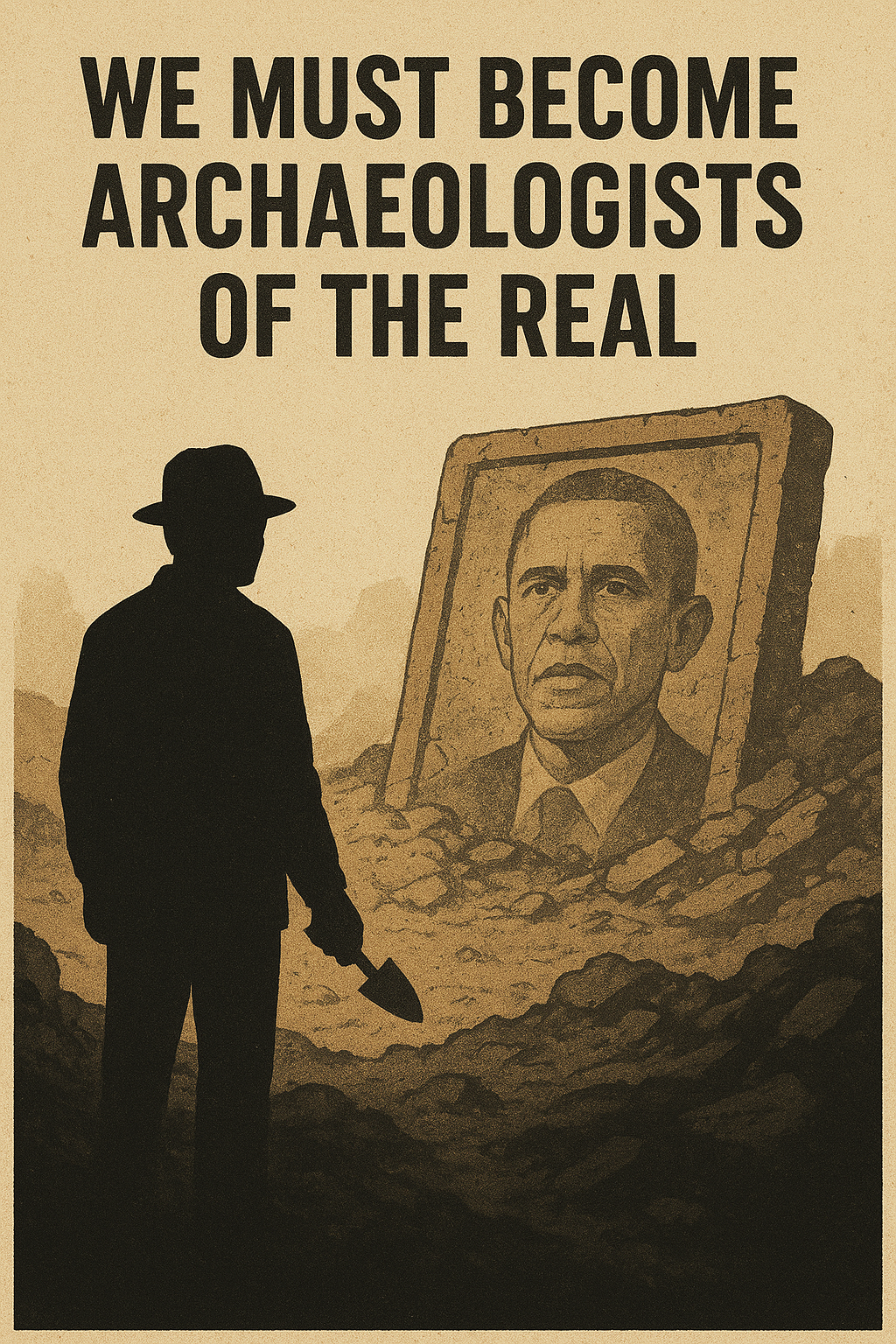
I remember the first time reality slipped. It was 2018, and a synthetic video of Barack Obama surfaced, his digital mouth forming words he never spoke, his face a puppet for another’s agenda. The technology was crude, but the message was pristine: this is possible. Five years later, that memory feels like a relic from a more innocent age, like remembering the world before the atom split. We are living in the aftermath, amid the silent, invisible fallout of a different kind of bomb—one that doesn’t shatter buildings, but the ground we stand on to perceive them.
The Machinery of Power
There has always been a rhythm to the struggle between power and epistemic coup, a silent, systemic assault on the very possibility of shared truth. And I feel it not just in the headlines, but in the slow erosion of my own certainty, the quiet doubt that now accompanies every image, every video, every voice.
Beyond the Surface
The technologies driving this dissolution are not mere tools; they are solvents. A Photoshopped image alters reality; a deepfake annihilates the very category of the photograph as evidence. To understand the profundity of this shift, we must move beyond abstraction and into the gut-wrenching specifics. Imagine a human rights activist, let’s call her Anya, standing before a panel of diplomats at The Hague. For years, she has risked her life to smuggle out evidence of a genocide. She presses play on a video: it shows her village, her neighbors, being executed by government soldiers. The room is silent, heavy with the weight of the real.
The Logic of Domination
Then, the state’s representative stands. He does not deny the events. Instead, he plays another video. It is a deepfake of breathtaking quality. It shows Anya’s neighbors alive, being led peacefully away by soldiers. It shows Anya herself, in a different context, accepting money from a foreign agent and discussing a plan to fabricate atrocity footage. The audio is her voice, synthesized from hours of intercepted phone calls, saying, “We must make the world believe.” The diplomat shrugs. “Which video is real?” he asks. “In this new world, who can truly know?” He hasn’t presented a counter-narrative; he has detonated the very concept of narrative. Anya’s truth, hard-won and sacred, is dissolved in a bath of algorithmic doubt. The cost of generating this synthetic uncertainty is trivial; the cost of her authentic evidence was nearly her life. This is the new asymmetry.
A Deeper Mechanism
This manufactured vertigo is the goal, not a byproduct. The most potent weapon is no longer the lie, but the liquefaction of the real. It is a strategy of exhaustion. When every piece of information requires a forensic-level analysis that the average person does not have the time or skill to perform, the easiest recourse is cynical disengagement. “Nothing is true, and therefore, nothing matters.” This is the mantra of the defeated, the sound of a civic body giving up. It is the digital equivalent of the Tower of Babel, but with a more sinister design: we are not speaking different languages by accident; the confusion is being engineered, beam by beam, to prevent us from uniting against the architects.
The Instruments of Authority
So, what becomes of powerlessness in this new landscape? The old tools of resistance are blunted. The truthful video, the heartfelt testimony, the leaked document—all can be rendered impotent with a shrug and the word “deepfake.” The new resistance, therefore, must be epistemological. It must fight to rebuild the foundations of trust from the ground up. This will require more than digital literacy; it demands a new form of societal alchemy, a way to turn the fluid back into solid ground.
The Calculus of Power
But what does this archaeology look like in practice? It is not a retreat to Luddism, but a radical recommitment to context, provenance, and the un-automatable human. It means valuing the slow, painstaking work of journalists who don’t just report the video, but trace its metadata, corroborate its location, and interview the human being who held the camera. It means culturally re-learning how to trust the small, un-fakeable imperfections of lived experience: the tremor in a voice that no large language model can yet perfectly simulate, the inconsistent shadow in a real-world scene, the tangible presence of a witness whose face you can see and whose hand you can shake.
The Theater of the State
This archaeology also requires a new kind of writing, a new kind of testimony. As writers, our role is no longer just to describe the world, but to anchor it. We must become masters of context, weaving webs of verifiable detail around our stories that are too complex, too nuanced, too human to be easily synthesized. We must embrace a “new sincerity”—a raw, context-dependent authenticity that becomes its own certificate of legitimacy. In an age of synthetic fluency, the stutter, the hesitation, the emotionally messy and contradictory human narrative may become the ultimate watermark of the real.
The Anatomy of Submission
The disintegration of truth is not an inevitable byproduct of technology; it is an active project. It is the most audacious power grab in human history, an attempt to not just rule the world, but to define it. To be powerless in the face of this is to be rendered a ghost in a machine. The task before us is to bear witness to this great unraveling, and to begin, word by careful word, to weave the world back together. We must dig through the digital rubble, sifting for shards of the verifiable. We must insist on the weight of evidence, the sanctity of a story told by a human to another human. We must remember that before power can be challenged, the ground on which we stand to challenge it must be believed to be solid. That belief is now the most contested, and the most essential, territory of all. And we are all archaeologists now.