The Architecture of Control
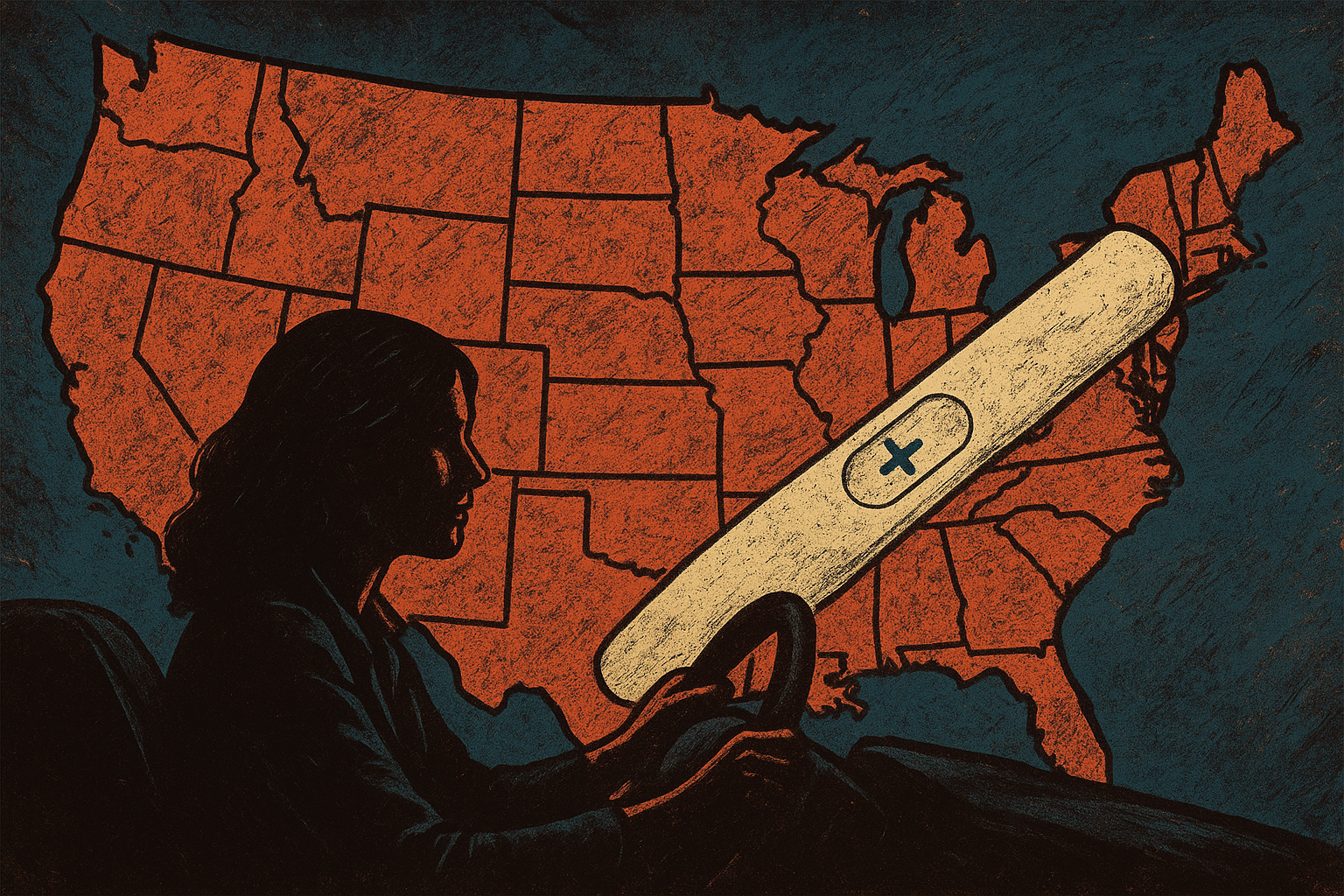
The map of America has been redrawn, not in the stark, clean lines of a cartographer’s pen, but in the desperate, invisible ink of new anxieties. It is a palimpsest of peril, where state lines have become the difference between autonomy and subjugation, between a private choice and a public crime. Following the tectonic judicial shift that overturned Roe v. Wade, a generation of women has been forced into a new kind of fugitive status. This is not the fugitive of cinematic fantasy—a figure cloaked in shadows, fleeing with a bag of cash and a trail of violence. This is a quieter, more insidious exodus. It is a diaspora of the desperate, moving through the mundane channels of everyday life, their rebellion measured in doctor’s appointments kept secret, in miles driven in silence, in the digital breadcrumbs they must meticulously erase. In this new moral and logistical landscape, privacy has become the most valuable currency, and mobility, a profound, heartbreaking form of resistance.
The Machinery of Power
The fugitive’s journey begins not at a border, but in the interior, in the quiet terror of a positive test. The blue line on the plastic stick becomes a warrant, its implications echoing through a life suddenly circumscribed. A woman in Louisiana, a teacher perhaps, or a student, finds her body is no longer her own sovereign territory but a site of potential legal contention. Her first task is to learn the new lexicon of her condition: not the language of gestation and hope, but of telemedicine protocols, VPNs, mail-forwarding services, and the specific gestational limits of neighboring states. She must become a cartographer of clandestine routes, plotting a course from a state that views her as an incubator to one that still sees her as a citizen.
Beyond the Surface
This logistical labyrinth is the first layer of the moral injury. The energy that should be reserved for the complex, personal calculus of creating a family—or not—is siphoned off into a draining game of espionage. She must scrutinize her digital footprint with the paranoia of a whistleblower. Her search history, her period-tracking app, her text messages to a trusted friend—all are potential witnesses for the prosecution. In a world of data brokers and digital dragnets, privacy is not a given; it is a fortress she must build, brick by digital brick, knowing any chink could be her undoing. She pays for this privacy with her mental peace, with her savings, with the simple, unburdened joy that should accompany the early stages of pregnancy, whatever its ultimate outcome.
The Logic of Domination
The journey itself is a study in surreal dissonance. Imagine her on the road, this new fugitive. She is not speeding down dirt roads with pursuers on her tail; she is driving a Honda Civic on a well-maintained interstate, passing billboards for fast food and truck stops. She is a phantom in plain sight. The other drivers, the families in minivans, the truckers hauling freight—none know that the woman in the next lane, sipping coffee, is navigating a medical underground. Her resistance is not a shouted slogan but the steady hum of tires on asphalt, the quiet determination to cross an arbitrary line that will restore her personhood. Each mile marker she passes is a small, hard-won victory against the tyranny of geography.
A Deeper Mechanism
This quiet exodus has birthed a new geography of care and crisis. On one side of these newly potent borders, clinics have become fortresses, oases under siege. The air inside is thick with a mixture of relief and residual fear. The women in the waiting rooms are pilgrims who have made it to the sanctuary. They share a silent, weary camaraderie, their stories etched in the tight lines around their eyes. They have sold their privacy to buy back a piece of their future. They have traded in their dignity at the border for the chance to reclaim it in a sterile procedure room.
The Instruments of Authority
Meanwhile, the states they fled have cultivated a new ecosystem of suspicion. The moral landscape there is not one of compassion for potential life, but of punitive surveillance. The neighbor, the ex-partner, the disgruntled coworker—all are potential informants, incentivized by bounty-hunter laws that turn civic duty into a predatory enterprise. The doctor’s office, once a sacrosanct space of confidentiality, can feel like a trap. This is the true perversion: the law, which should protect, now coerces. It turns community into a network of spies and a woman’s own body into a crime scene waiting to be discovered.
The Calculus of Power
To call this a “states’ rights” issue is a grotesque oversimplification that sanitizes the human reality. It is the legislative equivalent of drawing a line in the sand and telling someone on the wrong side they must drown. The moral burden of this forced migration is not on the women who flee, but on the systems that make fugitives of them. It is a policy of deliberate cruelty, dressed in the language of morality, designed to exhaust, impoverish, and punish. It says to a woman: your dreams, your health, your economic stability, your very judgment are secondary to the location of your uterus. Your freedom is conditional, a commodity available only to those with the means to travel for it.
The Theater of the State
And herein lies the starkest injustice of this quiet exodus: it is a fugitive status reserved predominantly for the poor. The wealthy have always had mobility; they can frame their journey as a “weekend trip” to a coastal city, a discrete medical appointment folded into a vacation. Their privacy is fortified by wealth—private jets, lawyers on retainer, second homes. But the waitress, the single mother, the college student working two jobs—they cannot easily vanish. They must beg for time off from work they cannot afford to lose, scrape together gas money, find care for their children, and run a gauntlet of financial and logistical barriers that are, for many, insurmountable. For them, the “choice” is a phantom. Their resistance is crushed under the weight of economic reality, forcing them to carry to term against their will, a profound and state-mandated indentureship.
The Anatomy of Submission
We are witnessing the rise of a new underground railroad, powered not by conductors and safe houses in the traditional sense, but by networks of activists, abortion funds, and practical support organizations. They are the quiet engineers of this resistance, providing the maps, the funds, the rides, and the shelter. They are the moral conscience of a nation that has lost its way, recognizing that an unjust law does not deserve to be called law at all. Their work is a testament to the fact that when the state fails its people, people will not fail each other.
The Grammar of Control
A generation of women is learning, in the most intimate way possible, that their citizenship is secondary. They are learning that their bodies are battlegrounds, and their most personal decisions are now matters of public policy and legal jeopardy. This forced fugitive status is a slow-burning trauma, a quiet corrosion of the spirit. It teaches a woman that she is not fully free, that her autonomy is provisional, that her home can become her prison with a single missed period.
The Shape of the Cage
This quiet exodus is the shame of a nation that professes freedom while functionally creating a class of internal refugees. The hum of their cars on the highway is the sound of a system failing. The silent, determined women in the waiting rooms of clinics across state lines are the undeniable evidence of a profound national fracture. They are fugitives not from justice, but from injustice. And in their refusal to be governed by the most intimate form of coercion, in their courageous, weary mobility, they are not just seeking healthcare. They are voting with their feet, enacting a resistance that is as personal as it is political, rewriting the map of their own lives on a landscape that tried to erase them.