The Architecture of Control
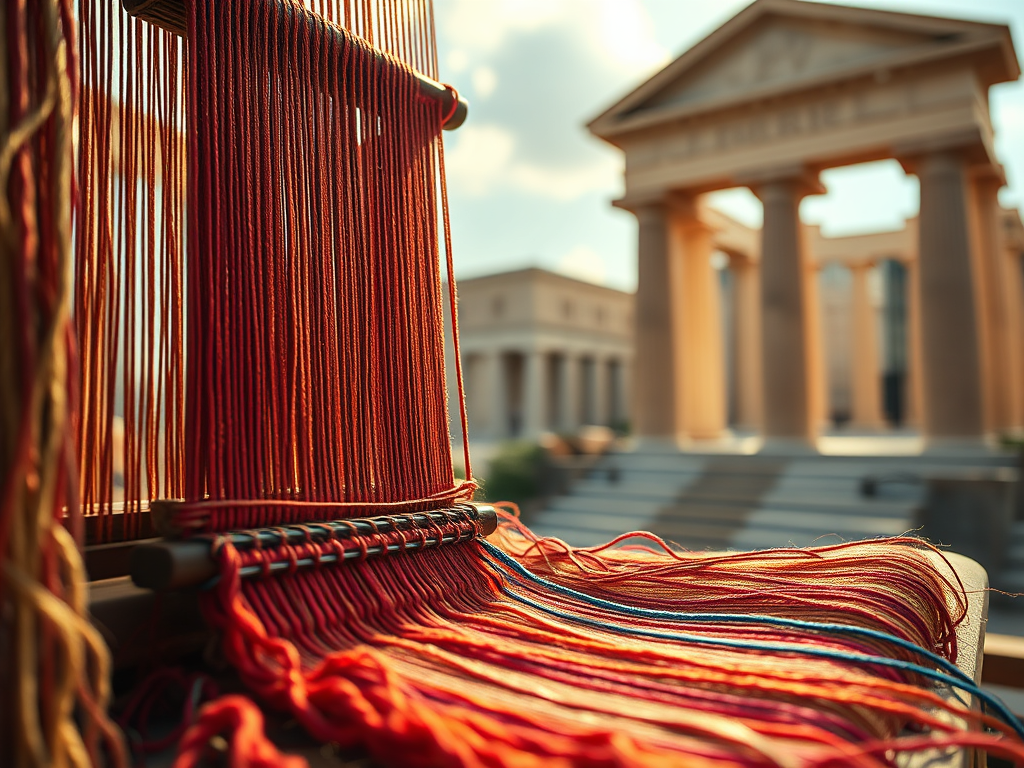
The American tapestry is a grand, unfinished weaving, its loom humming with the promise of E pluribus unum. Its strength is not in its uniformity, but in the defiant, brilliant clash of its threads—crimson and ochre, indigo and gold—each pulled taut by the hope of a shared pattern. But now, a shadow falls across the loom. It is the weaver’s own hand, trembling with a new fear, plucking at threads of a certain hue. The hand moves with the cold permission of a decay. I can smell the dust of that other, earlier unraveling. Rome’s genius was its stomach. It could digest the world—Gauls, Berbers, Hellenes—and transform them into Romans. They built aqueducts that sang with water and laws that aspired to reason. Their belonging, their Romanitas, was a spiritual citizenship. But the empire grew thin, its nerves frayed. Edicts were scribbled onto parchment, creating a hierarchy of humanity: the honestiores, the privileged, and the humiliores, the lowly, whose skin or birthplace marked them for the harsher whip, the crueler tax. The state began to profile its own soul. The consequence was not order, but a hollowing out. The sense of “we” dissolved into a cacophony of “them.” When the storm came, the aqueducts fell silent, for there was no longer a united people to mend them.
Beyond the Surface
The echo is here, now, in the diesel growl of an ICE van idling on a suburban street. The Court’s ruling is not mere text; it is a change in the productivity sacrificed on the altar of vigilance. The student’s mind, which should be alight with equations and sonnets, is instead a darkened room with a single window, watching for official cars. The entrepreneur’s dream, a fragile sapling, withers in the wind of this uncertainty. Why invest your soul in land that claims you do not belong to it? We are poisoning the very ground from which our future harvests must spring.
A Deeper Mechanism
True political analysts will be able to map this tragic folly. The architects of this policy speak the language of fortresses—walls, borders, purity. But they are building a tomb. A nation that profiles its residents is like a gardener who, in a fit of fear, uproots every flower that does not match a narrow, fading picture in a seed catalog. The result is not a stronger garden, but a monoculture, a silent, colorless field, bereft of pollinators and helpless against the first true blight. America’s power has always been its glorious, chaotic biodiversity—its hybrid vigor. This is the engine of our innovation, the source of our art, the wellspring of our resilience. To sacrifice it for the illusion of security is to trade a living forest for a collection of neatly stacked, and highly flammable, lumber.
The Instruments of Authority
We are thus committing an act of profound self-sabotage, trading diamonds for the cheap glass of prejudice. We are telling the future—the one who will code our AI, compose our anthems, heal our pandemic-scarred bodies—that they are tenants, not heirs. That their lease can be revoked based on a glance. This is not the path to renewed greatness; it is the recipe for a long, inglorious autumn.
The Calculus of Power
And the long-term consequences? They unspool like a dark thread through the decades to come. We are weaving a legacy of division, a America where the first lesson learned is distrust. We are building a society where a child’s question, “Where are you from?” carries the weight of an interrogation. The economy will not crash; it will atrophy, its muscles weakened by the millions of small, creative acts that were never born, the businesses never opened, the cures never discovered. The national character, once brash and optimistic, will become sullen, paranoid, and small. The tapestry, once a vibrant testament to a daring idea, will hang limp, its colors muted, its pattern forgotten. The unraveling will be quiet, marked not by the roar of falling statues, but by the relentless, sighing snap of one thread of hope, then another, and another, until all that remains is the memory of the weave.