The Architecture of Control
There are books that you read and forget, and there are books that read you back. Les Misérables belongs to the latter kind — it peers through time and finds you. Victor Hugo did not write it merely as fiction; he wrote it as a wound, one that refuses to close. Beneath its sprawling story of convicts and revolutionaries lies a quiet question that echoes into our century: what does it mean to live in a society that mistakes punishment for justice, order for morality, and survival for life?
The Machinery of Power
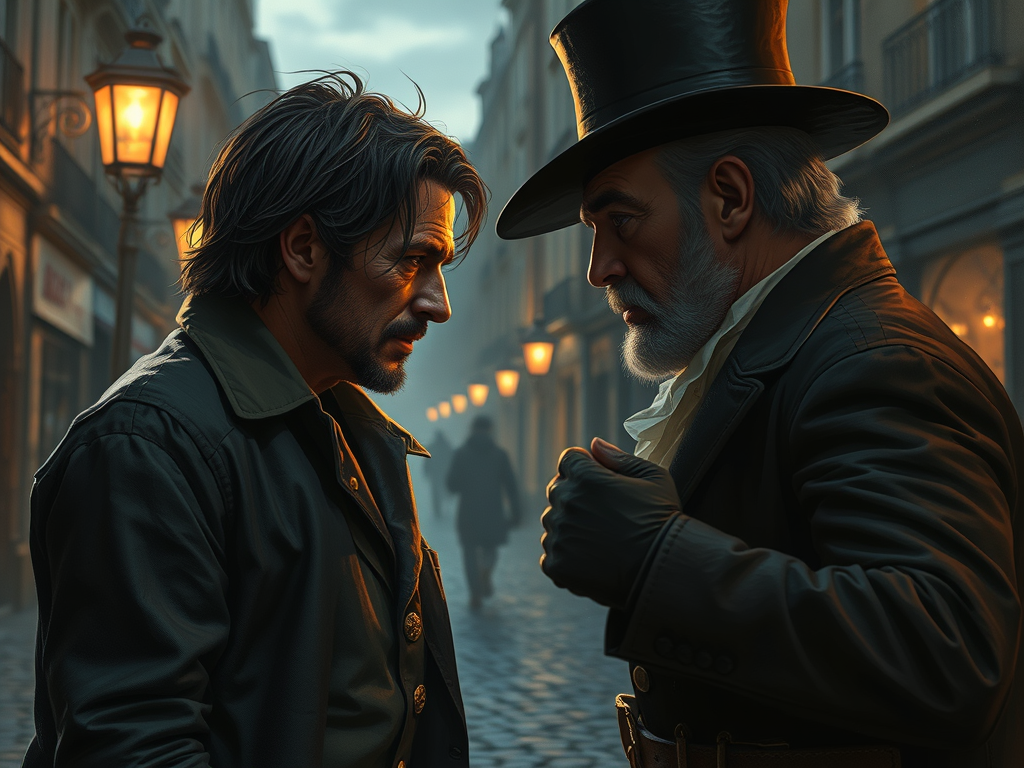
At its heart, Les Misérables is a duel — between a man and the world, between mercy and the machinery of the law. Jean Valjean, an ex-convict who stole a loaf of bread to feed a starving child, is branded for life. His yellow passport becomes a mark of Cain — a bureaucratic tattoo that bars him from work, lodging, or dignity. It is a document of permanent exile, a reminder that even when a sentence ends, society’s condemnation does not. Across from him stands Inspector Javert, the relentless guardian of the code, who worships the law as if it were divine. Javert does not hate Valjean; he simply cannot imagine a universe where a criminal might be good.In that tension — between Valjean’s fragile humanity and Javert’s inflexible morality — lies Hugo’s unending question: what is justice without compassion?
Beyond the Surface
It would be comforting to think that question belonged to 19th-century France, a society of cobblestone streets and carriages. But look around. Our prisons still overflow with Valjeans — men and women condemned for minor crimes, their records trailing them like shadows they can never outrun. We call it “mass incarceration.” Hugo called it “civil death.” The vocabulary changes; the cruelty remains.The first time I read the novel, I was young enough to believe in systems. I thought that laws existed to protect, not to crush. But Valjean’s story undid that faith gently, like a thread being pulled from a tightly woven cloth. I remember closing the book after the Bishop forgave him — gave him the silver he had stolen — and thinking that mercy was the most subversive act in the world. The Bishop does not preach, he does not punish; he loves, and that love rewrites the course of another man’s life. I have yet to see an algorithm capable of such grace.
The Logic of Domination
Fantine’s tragedy, too, feels uncomfortably familiar. She is not destroyed by vice but by circumstance — by poverty, by indifference, by the cruelty of respectable society. Her body becomes her only currency; her teeth and hair, her collateral. In her, I see the working poor of today: the single mother juggling two jobs and a medical bill, the warehouse worker dismissed for taking a sick day, the invisible army that keeps the machinery of comfort running for others while slipping silently into exhaustion. And when comfort isn’t enough, there’s an Only Fans model, empowering herself to satisfy the lust of men. When Fantine dies, Hugo does not turn away. He names her death what it is — a murder committed by society in slow motion.
A Deeper Mechanism
And perhaps that is the most radical thing about Les Misérables: its refusal to let suffering be anonymous. Hugo’s empathy is forensic; it names, it documents, it indicts. “As long as there shall exist, by reason of law and custom, a social condemnation,” he writes, “books of this nature will not be useless.” Nearly two centuries later, his words read like prophecy.
The Instruments of Authority
The barricade scenes — loud, defiant, drenched in the futile courage of young men — are remembered as the novel’s climax. But their rebellion is less about muskets than meaning. The June Rebellion of 1832 failed, yes, but in that failure lies the unending pulse of hope. The students are not merely fighting a monarchy; they are fighting amnesia. They are trying to remind France that “Liberty, Equality, Fraternity” were not meant to be museum words.
The Calculus of Power
Every generation builds its own barricade. Ours may not be cobblestone walls but digital threads, hashtags, and marches — each a small refusal against indifference. The protestors of Black Lives Matter, the women of Iran, the voices demanding climate justice — all are modern echoes of Enjolras and his comrades, their idealism stubborn against the cynicism of the age.
The Theater of the State
But the modern state, far more cunning than the monarchies of Hugo’s time, has learned something that kings never quite did: that revolutions are born in youth. And so it begins early — not with batons, but with debt. Student loans that last a lifetime; degrees that promise freedom but deliver servitude. The young are chained not to prison walls but to interest rates, their idealism mortgaged to survive. It is a quieter cruelty, almost elegant in its efficiency — a system that ensures the very generation most capable of rebellion is too busy paying to revolt. The state no longer needs to kill its revolutionaries; it simply bills them.
The Anatomy of Submission
And yet, what makes Les Misérables so devastating is that it does not end in revolution. It ends in forgiveness. The barricades fall, the brave die, and Valjean, exhausted by life and mercy, fades quietly into death. He has spent decades trying to atone for a crime that was never truly his — hunger. Javert, unable to reconcile the law with the goodness he witnesses in Valjean, ends his own life. The system he served so faithfully collapses under the weight of its own purity.
The Grammar of Control
I sometimes think Javert was the most modern character of them all. His faith in the law is the faith we have placed in data, in procedure, in machine learning — systems that promise objectivity and deliver indifference. We are building new Javerts out of code and calling them fair. But Hugo would have recognized the danger instantly: justice without empathy is not progress; it is precision in cruelty.Hugo’s France was a society caught between revolutions — one that had shouted “Liberty, Equality, Fraternity” and then quietly forgotten what those words meant. It is not so different from ours. We live in democracies that mouth the language of equality but run on hierarchies of wealth. We punish the poor for being poor and call it accountability. We celebrate meritocracy and ignore the scaffolding of privilege that holds it up. Fantine’s coffin, Valjean’s passport, and the barricades of Paris — they have all found new shapes.
The Shape of the Cage
And still, Les Misérables whispers its lesson: that the measure of a society is not its laws, but its mercy. Hugo believed that the state’s legitimacy rested not on its power to punish but on its capacity to forgive. “To love another person,” he wrote, “is to see the face of God.” In that sentence lies the novel’s entire theology — and its politics. Love, not as sentiment, but as radical recognition: of another’s suffering, of our shared fragility, of the small, stubborn hope that people can change.
The Geography of Influence
When I think of Valjean now, I think of him not as a character but as a mirror. His journey — from thief to mayor, from hunted man to guardian — is less about redemption than about the world’s refusal to allow it. And yet he keeps going. He keeps building, forgiving, sheltering. In his defiance, there is something sacred.
The Circulation of Authority
Perhaps that is why Les Misérables endures. Not because it tells us what we were, but because it reminds us what we still are. We are a civilization that can send rockets to Mars but cannot guarantee shelter for the homeless. We are capable of artificial intelligence but incapable of universal compassion. Hugo’s Paris was divided by wealth and want; our cities still echo with the same divide, only taller, shinier, more discreet.
The Instruments of Consent
Some nights, when the news scroll feels like a requiem — war, debt, displacement, despair — I find myself returning to that final image of Valjean, dying quietly under the glow of a candle. There is no grandeur, no revolution, no audience. Just a tired man, forgiven at last, holding the memory of a child he saved. It is almost unbearably simple. But perhaps that is Hugo’s final act of rebellion — to remind us that in a world obsessed with systems, redemption is still a matter of the soul.