The Architecture of Control
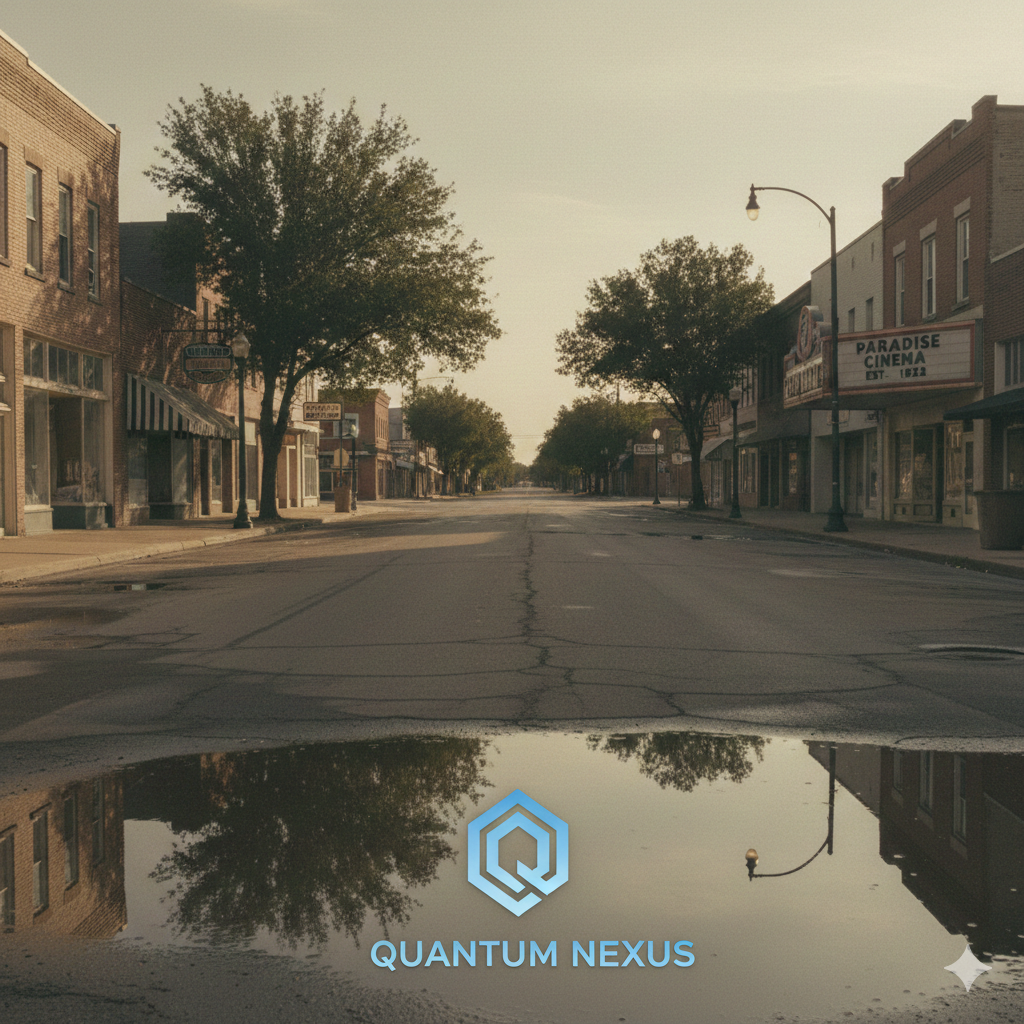
The American road is a psalm of individualism. It is a blacktop hymn sung by a lone driver, windows down, one hand on the wheel, the other tracing the limitless horizon. This is our foundational mythos: the unbound self, the conquering of distance, the sovereignty of the driver’s seat. We have paved a continent in its image, building not just roads, but an entire civilization predicated on the promise that you, and you alone, will propel yourself from desire to fulfillment. But stand at the corner of any struggling Main Street in Anywhere, USA, on a Tuesday afternoon, and listen to the silence between the occasional, furious rip of a passing pickup. That silence is the sound of a paradox. Our worship of unrestricted mobility has engineered a profound, pervasive immobility for the very economic entities we claim to cherish: our small businesses. For all the political liturgy praising the “backbone of our economy,” our infrastructure policy—a concrete manifestation of our values—reveals a bitter truth. We are not a nation of small business champions; we are a corporatist oligarchy in denim disguise, and our refusal to provide robust public transportation is the silent tax we levy on the heart of town, ensuring its slow, asphyxiating decline.
The Machinery of Power
Consider the anatomy of a classic American small business district, the kind pictured on optimistic municipal websites. It is walkable. Its storefronts are meant to be browsed. The bakery’s scent should waft onto the street, the bookstore’s display should catch a passerby’s eye, the hardware store’s proprietor should be consulted on a walk-in’s obscure plumbing problem. This ecosystem thrives on serendipity and low-friction access. It operates on the economics of the “stroll.” Now, overlay upon this the reality of the American built environment: a moat of parking lots, a spaghetti-tangle of high-speed arterials, a barren streetscape where the only living creatures are exposed to the mortal danger of two-ton metal boxes moving at 45 miles per hour. To reach this bastion of local commerce, a citizen must undertake a planned expedition. They must allocate a specific resource—gasoline—and a specific, sunk cost: the time and focus demanded by piloting a private vehicle through traffic. This transforms shopping from a spontaneous loneliness/”>social interaction into a targeted, logistical mission.
Beyond the Surface
This is where the oligarchic tilt reveals itself. Who benefits from this logistics-heavy landscape? The large corporation. The big-box store, the warehouse club, the fast-food chain—these are organisms perfectly adapted to the automotive ecosystem. They are built for destination trips. They are surrounded by seas of free parking, their economies of scale able to absorb the real estate costs of storing thousands of cars. They offer one-stop, bulk consumption, justifying the dedicated journey. The small business, in contrast, is a creature of foot traffic and multiple, small transactions. It cannot compete on the logistics of parking. It withers when every errand requires a strategic campaign. By forcing every economic act into the container of a private automobile, we have systematically disadvantaged the small and elevated the vast. We have created a playing field where the first and most significant barrier to entry for a customer is not price or quality, but the hassle of parking.
The Logic of Domination
The politicians, of course, will recite the catechism of small business from the podiums of ribbon-cuttings. They will speak of “cutting red tape” and “lowering taxes,” all while presiding over a system of red tape woven into the very fabric of our towns: zoning laws that mandate parking minimums, strip-mall developments that turn buildings into fortresses against pedestrians, transportation budgets that allocate billions for highway widening while starving bus routes. This is the pro-corporate, anti-small business bias in its most insidious form: not a direct attack, but an ambient condition, a setting so normalized we mistake it for nature. It is the infrastructure of exclusion. The elderly person who no longer drives, the teenager without a car, the low-wage worker for whom auto ownership is a precarious financial cliff—these potential customers are rendered non-persons by our transportation theology. They are exiled from the commercial life of the community. A small business loses them not to a competitor, but to sheer geometry. Meanwhile, the corporation, with its delivery apps and its sprawling, car-centric footprints, can patch over this exclusion for some, for a fee, further centralizing economic activity.
A Deeper Mechanism
The true free economy, the one that resists oligarchy, is not merely one with low statutory taxes. It is an economy of access and opportunity. It is an economy where a customer with ten dollars and a spare half-hour can wander into a shop and emerge with a trinket and a conversation. It is an economy where an employee can get to work reliably without the crippling financial burden of car payments, insurance, and fuel—a burden that often consumes the very wages paid by the small business owner struggling to make payroll. Public transportation—frequent, reliable, safe, and dignified—is the circulatory system for this kind of economy. It is not a socialist imposition, but a market-enabling platform. The bus that runs down Main Street every fifteen minutes is not a loss-making public service; it is a linear, mobile subsidy to every business along its route. It delivers customers, employees, and vitality. It enables the clustering and density that make small-scale entrepreneurship viable. It allows for the mingling and interaction that turns a shopping district into a community, and a community into a market with a soul.
The Instruments of Authority
Without it, we descend into the oligarchic desert. We get the landscape we now inhabit: food deserts served only by distant Walmart Supercenters, downtowns that die after 5 PM, and a commercial life dominated by a handful of national chains whose aesthetic is “anywhere” and whose loyalty is to quarterly shareholder reports. The small business owner becomes a Sisyphus, not just battling rent and regulations, but battling the very spatial logic of the nation. They are told to innovate, to attract customers, while the town makes it physically punishing to reach their door.
The Calculus of Power
The road, our sacred space, becomes a place of solitude and separation. We drive alone, encased in glass and steel, past the hollowed-out shells of what used to be. We mistake the freedom of the open highway for economic freedom, not seeing that for the small business, the highway is often a bypass, a river that diverted the lifeblood of traffic around the town square. The oligarchy is not a cabal of men in a smoke-filled room; it is the inevitable economic gravity that pulls towards consolidation when the infrastructure makes diffusion untenable. It is the natural winner in a game where the only legal way to move is to own a private vehicle.
The Theater of the State
To love small business is to love the sidewalk, the bike lane, the park bench, the bus shelter. It is to love proximity and chance. It is to build an infrastructure of gathering, not just of transit. The lyrical promise of America was never just the endless road for the lone pioneer; it was also the bustling town square where that pioneer came to trade, to talk, to build something common. That square is quiet now, waiting not for a tax break, but for a bus. It is waiting for the footsteps of people freed, for a few miles and a few errands, from the spiritual and financial burden of the driver’s seat. Until we see that the most pro-small business policy isn’t a slogan, but a subway line, a streetcar, a network of buses connecting people to places rather than just parking lots to other parking lots, we are merely offering thoughts and prayers to a patient we are actively, relentlessly starving. The heart of a free economy beats where people can easily meet. And right now, in too much of America, that heart is arrhythmic, fading, waiting for a pulse of public life to course back through its veins.