The Architecture of Control
I first sensed the shape of advantage at a backyard barbecue in a wealthy suburb. I was sixteen, visiting a school friend whose family had been affluent for generations. The conversation drifted to a “summer slump” in competitive activities because “all the talented young people are at their grandparents’ summer homes.” It wasn’t bragging. It was simple description, offered as casually as noting a shift in the weather.
The Machinery of Power
Only later, when I encountered C. Wright crisis. Family support, financial and relational, made experimentation safe. He could take the unpaid internship, postpone income to pursue “fit,” even travel to recalibrate his ambitions. The foundational questions of rent, debt, and survival were already solved.
The Logic of Domination
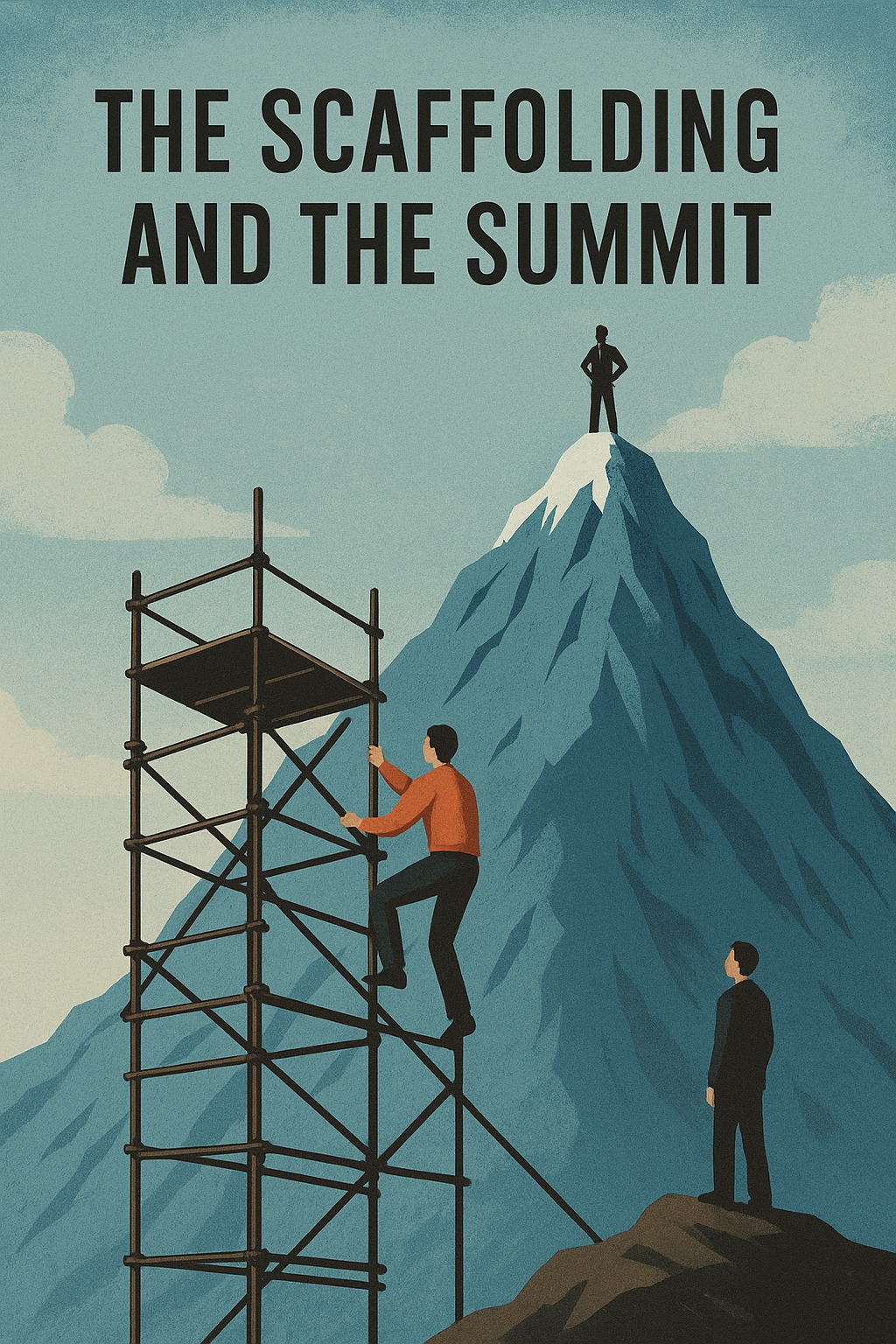
My path was different. I took the job that paid, not the one that impressed. I made choices shaped less by interest than by necessity. A medical bill or broken car wasn’t an inconvenience but a possible derailment. The metaphor of the mountain, in my case, wasn’t about altitude; it was about exposure. The margin for error thinned to nothing.
A Deeper Mechanism
But even here, nuance is required. Inheritance is not destiny. Not everyone with privilege becomes successful, and not everyone without it is blocked. Hard work and talent matter. But they matter differently depending on the conditions in which they grow. A seed can be hardy, but soil still determines whether it thrives.
The Instruments of Authority
Advancement often looks individual, but the supports beneath it are collective. Networks – schools, clubs, professional circles – function less like ladders and more like conveyor belts. They move some forward with almost invisible momentum.
The Calculus of Power
This does not mean those on the belt are unskilled, or that those off it are helpless. Many privileged people work hard, and many with few advantages forge paths through determination and ingenuity. But the architecture of opportunity is uneven: some doors require knocking, others open automatically.
The Theater of the State
Still, the metaphor can mislead if we let it calcify. Networks are not immutable. People build new ones, cross boundaries, create openings for others. Mentorship, solidarity, and public institutions can counterbalance inherited advantage. The landscape is unequal, but not fixed.
The Anatomy of Submission
The most insidious feature of meritocratic storytelling is the way it converts structural privilege into a personal virtue. If success is earned, then failure must be a flaw. This logic flattens lives into morality plays.
The Grammar of Control
Yet many who benefit from inherited advantages are aware of them and uneasy about them. I have seen this in my friend, the impulse to prove he is more than what he inherited. And many who start with less carry their own moral alibis: a belief that toughness forged in hardship grants a special clarity or authenticity. Structural stories cut both ways.
The Shape of the Cage
A more honest view abandons these narratives of purity. It recognizes that outcomes emerge from the meeting of agency and structure: effort, luck, history, and context intertwined. The mountain metaphor, if stretched too far, obscures this interplay. It suggests a fixed peak, a single route, a single definition of success.
The Geography of Influence
Real life is messier. Some people reject the climb altogether. Some redefine what counts as a summit. Some succeed spectacularly without scaffolding; others falter despite having every advantage.
The Circulation of Authority
If the terrain is unequal, the solution is not to shame the climbers but to examine the terrain itself. Talent is a seed, but the distribution of good soil is a policy choice. Public education, Acquiescence
Seeing both truths at once is harder than clinging to the simpler myth of meritocracy or the equally reductive myth that only structure matters. But clarity requires holding the tension.
The Frontiers of Resistance
The mountain is uneven, yes, but people are not passive climbers suspended on fixed paths. They improvise. They adapt. They build. And the work of a fair society is not to flatten the mountain, but to ensure that no one is condemned to the foothills by birth alone.